Fleece processing
What happens to a fleece after shearing.
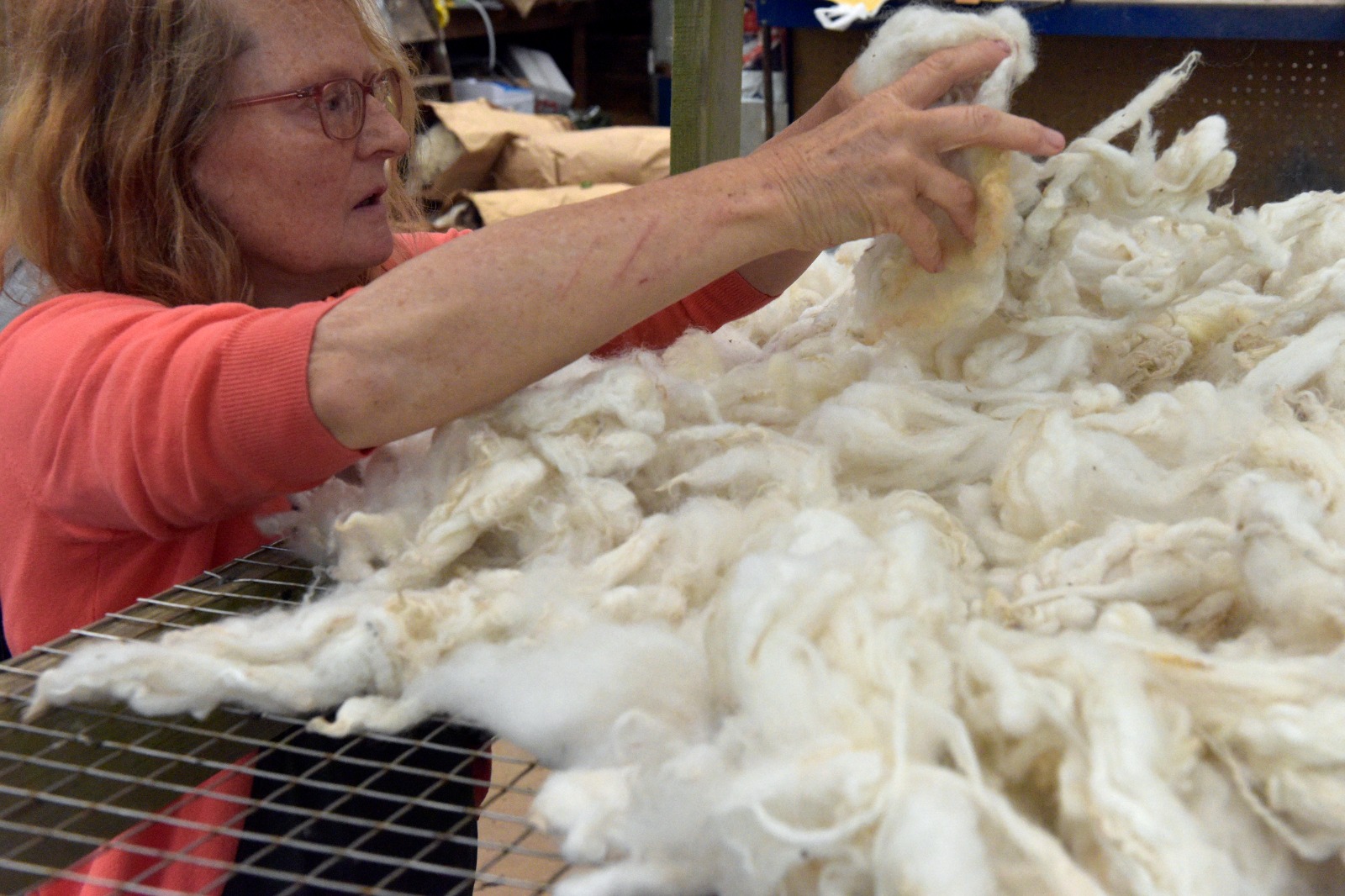
Shearing is the part everybody pictures. It is also the very beginning. What comes off the sheep in early summer is nothing like the soft, even wool that ends up in a gilet, and getting from one to the other takes a fortnight of washing, drying and patience.
Every fleece is processed by us, by hand, in our own mini mill at Milverton near Taunton. Nothing is sent away, nothing is blended with anyone else’s wool, and nothing loses track of the sheep it came from.
Two places
Pawlett Hams — where the sheep live and the fleece is grown.
Milverton — where the mini mill is and the work is done.
01
Washing
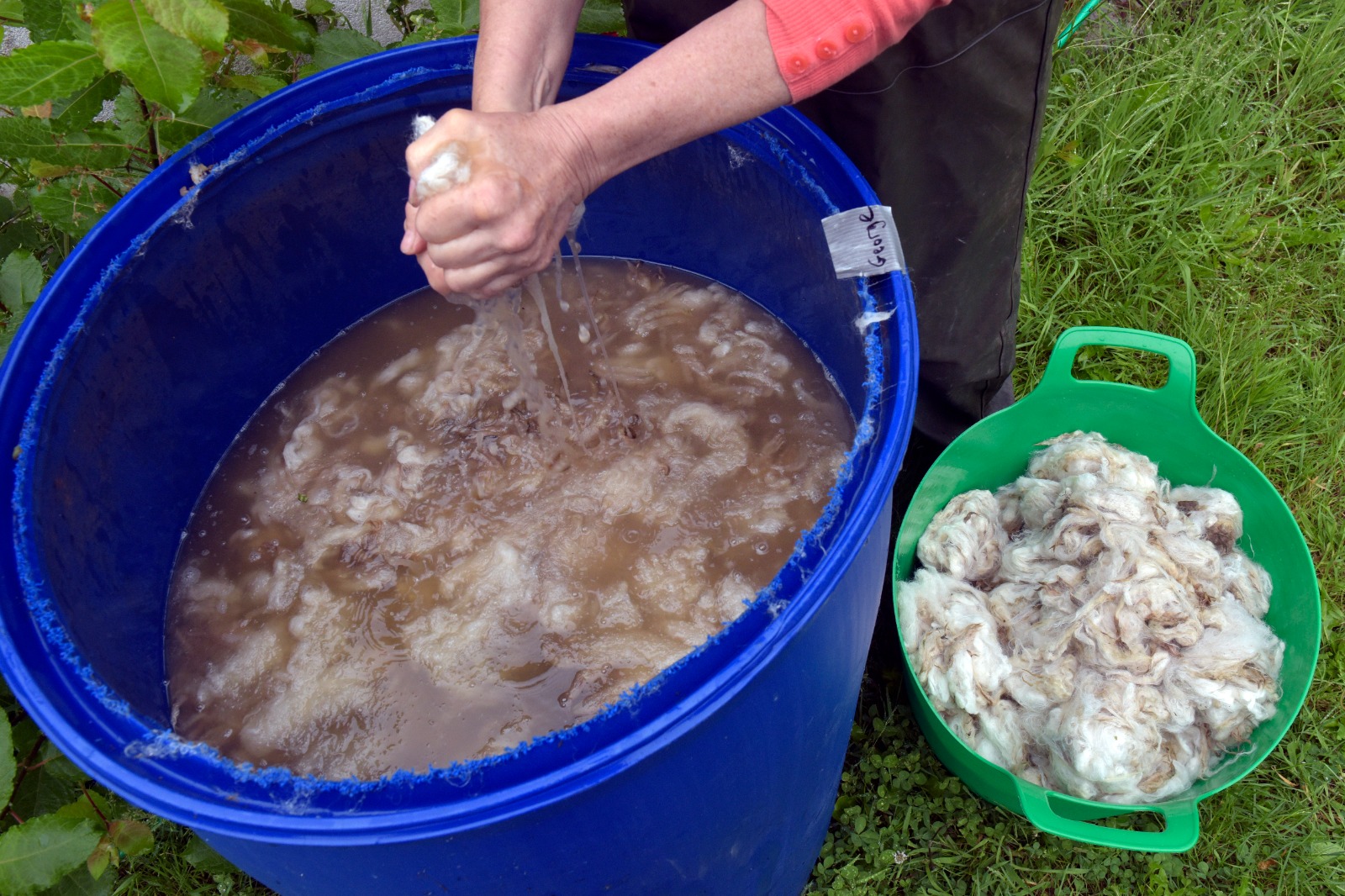
The fleece soaks for a full twenty-four hours first. After that it goes into a thirty-kilo washing machine and is washed three times and rinsed twice, then spun in a dehydrator to drive the water out.
Three washes and two rinses sounds excessive until you have handled a raw fleece. Then it goes onto the drying rack.
02
Picking
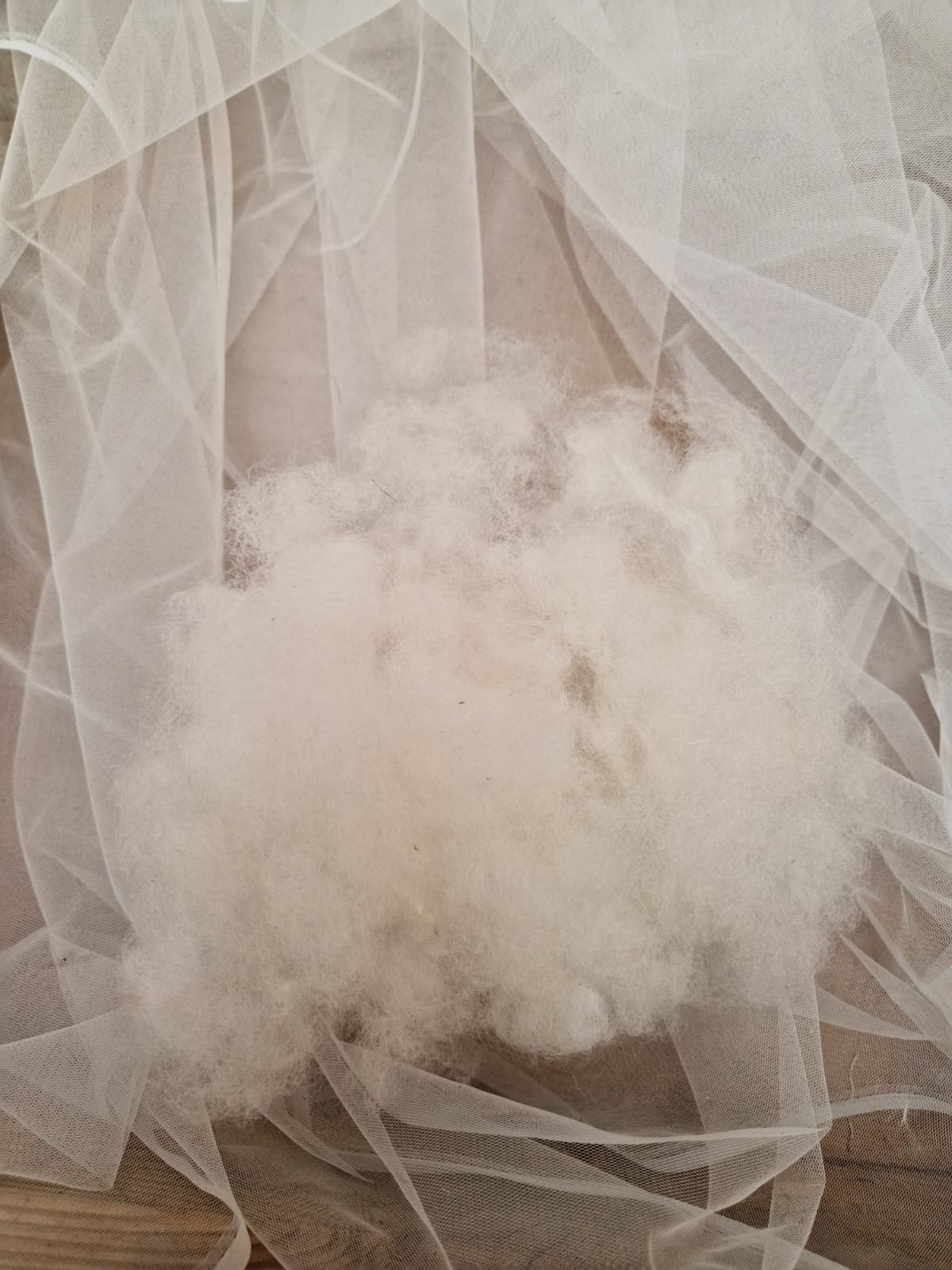
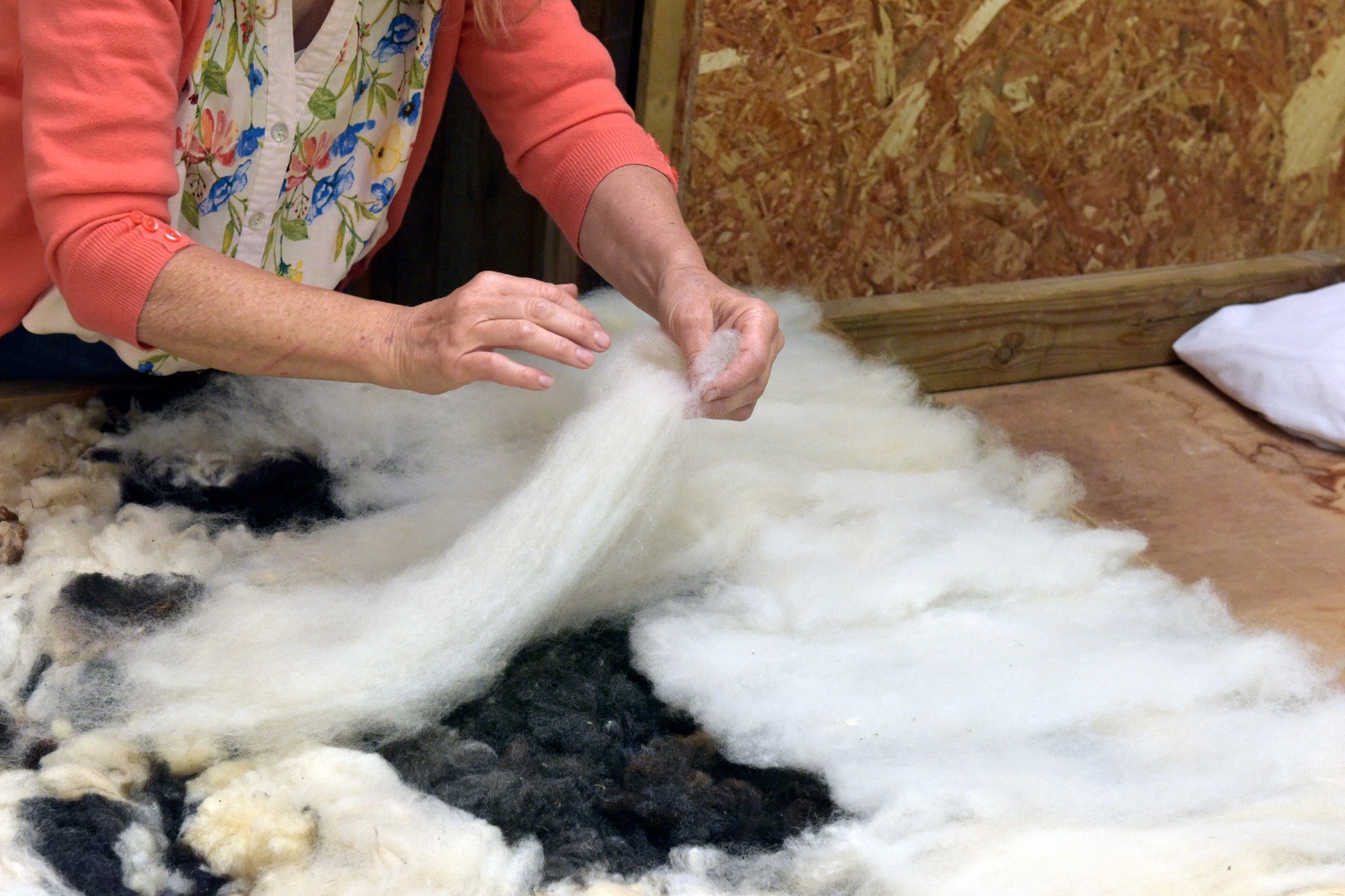
A dry fleece is still a dense, matted thing. The picker teases the locks apart and opens it all out into something light and airy.
This is the stage where the farm comes out of the wool: bits of hedge, seed heads, dried grass, everything a sheep collects over a year of living outdoors. It gets taken out by hand as we go, and the locks are turned outward ready for the next step.
Stop here and you have picked wool fibre.
03
Carding
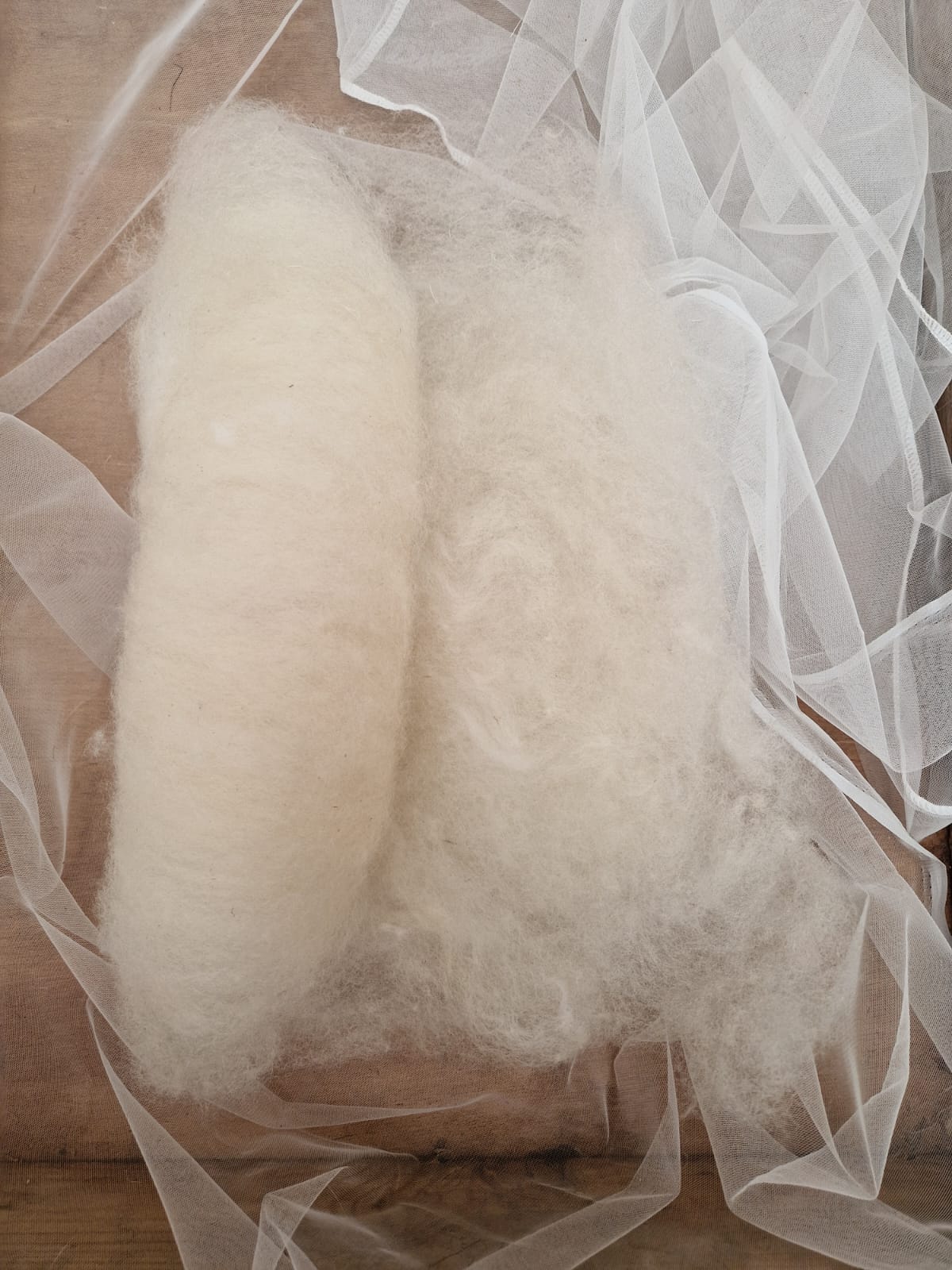
The carder is what makes wool feel like wool. It combs the opened fibres so they all lie in the same direction, and what comes off is a smooth, even batt with real loft to it.
Picked wool is cloud-like and random; carded wool is ordered. You can feel the difference immediately.
Stop here and you have carded wool, which is what most of our colourways are.
04
Felting
This is where it becomes cloth, and it is almost entirely done by hand.
A Jacob fleece is turned over so the cut side faces up, then laid on bubble wrap. The bubble wrap matters more than it sounds: it stops the locks underneath felting to themselves while you work the top. Over that goes the carded wool, laid in layers with the fibres running in alternating directions, three layers at least. Then the whole thing is covered with netting to hold it together.
Now the wet part. Hot water, a good squeeze of washing-up liquid, and then rubbing with soap. And rubbing. And rubbing. There is no shortcut and no machine for it.
Once it has started to hold, the whole piece is rolled up in one direction, untied, and rolled again the opposite way, so the fibres bind evenly rather than all pulling one way. Then back onto the drying rack it goes.
05
Making
When it is dry we brush it out, lay the pattern on top, cut it and sew it like any other cloth. At that point it stops being a fleece and starts being a Sheepkind garment.
It is slow, and there is a reason we keep it that way. Every fleece behaves slightly differently depending on the sheep it came from, and the only way to work with that is by hand, one at a time.
Buy the wool at any stage.
Picked, carded or knapped — whichever point suits what you are making.